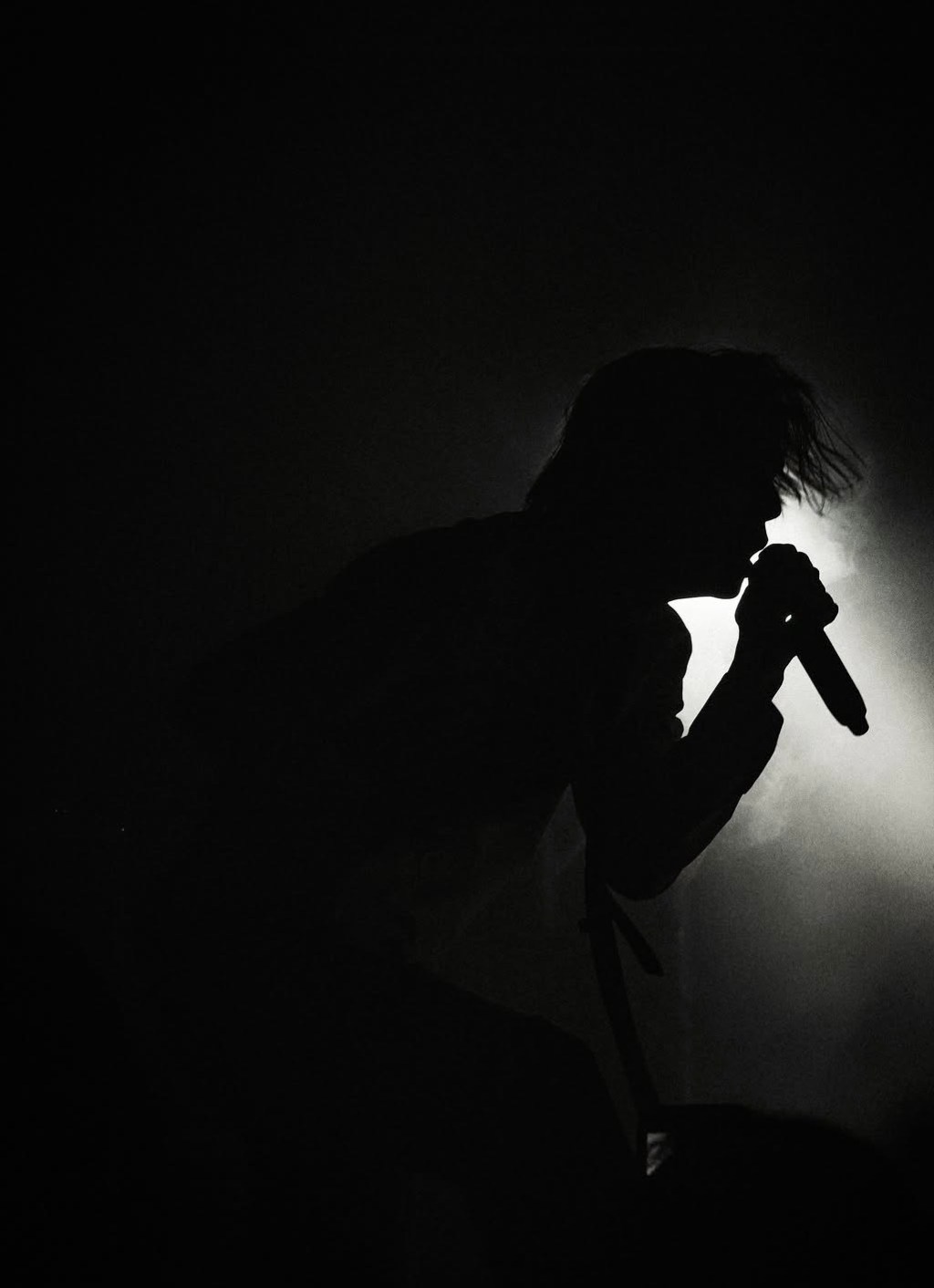
There is a difference between writing songs and telling the truth. Brayton does not blur that line. He erases it completely.
For him, music is not hypothetical. It is not crafted from imagined scenarios or distant emotions. Every lyric, every visual, every shift in sound traces back to something real. And more often than not, it traces back to one specific person.
“A lot of it is very directly at one person,” Brayton says. “It’s actually one specific person.”
That person, an ex-girlfriend whose sudden breakup and betrayal reshaped his life, became the catalyst for everything that followed. The moment lasted minutes. The impact is still unfolding.
“I got broken up with in like five minutes. Then she went and got with her drummer,” he says. “My whole artist trajectory changed when that happened.”
Before that, Brayton was moving in a completely different direction. Sonically. Visually. Even in how he presented himself. After it, everything shifted. The pain did not just influence the music. It became the foundation of it.
Writing What You Never Got to Say
Closure is something most people chase. Brayton creates it.
He does not write to exaggerate or dramatize. He writes because he did not get the chance to say what needed to be said in real time.
“Everything I’ve ever written is 100 percent true,” he explains. “I can’t write hypotheticals. It has to be real.”
That honesty is what gives songs like Love of Your Life and But I Did their weight. They are not just emotional. They are lived experiences.
During college, Brayton found himself dealing with more than heartbreak. He was isolated, misunderstood, and judged without context. Friends distanced themselves. People made assumptions. And in the middle of that, he was left to process everything alone.
“I felt broken up with, cheated on, and then isolated on top of all that,” he says.
That emotional pressure turned into music. Not as an outlet in the traditional sense, but as a direct translation of what he was feeling in the moment.
Some of those moments were impossible to ignore.
Like the night he unknowingly walked into a party where his ex was performing. With the same drummer.
“I’m standing there in the crowd, watching my ex sing with the guy she’s with now,” he says. “I had a drink in one hand and tears in the other.”
He was eventually asked to leave. Not for causing a scene, but simply for being there.
The next day, he went home and wrote one of the angriest songs he has ever made.
That song eventually turned into a tour moment. A crowd of people screaming lyrics that were born from one of the worst nights of his life.
“That’s what makes it worth it,” he says. “Going from nobody being on your side to having a thousand people connect with that feeling.”
Mortis, Pain, and Rebirth
Brayton’s music does not just live in sound. It lives in imagery.
The Mortis era is not just an aesthetic. It is a symbolic timeline of what he went through and how he processed it.
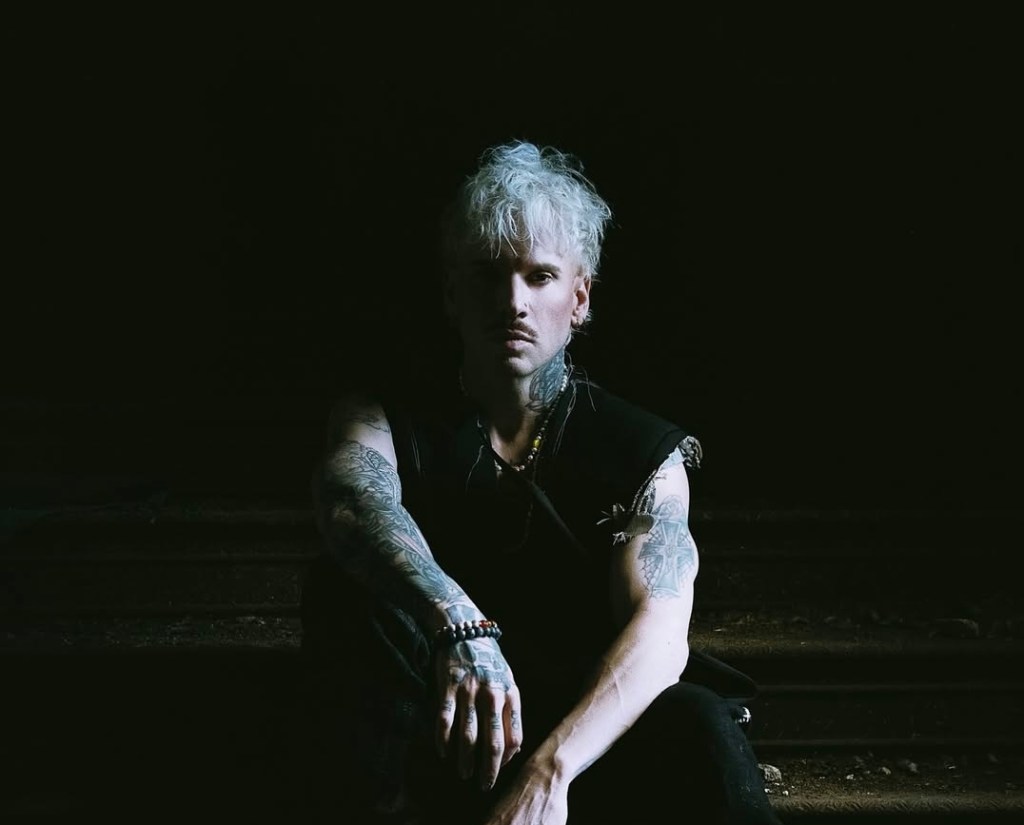
At the center of it is a tattoo. A broken clock, originally created as a tribute to that same relationship. The time on the clock marks the moment she left for tour.
At the time, it symbolized distance. Later, it became something else entirely.
“I felt super backstabbed,” he says. “And I had a back tattoo. So I leaned into that.”
The visual evolved. A knife in the back. Blood added to the design. A literal representation of betrayal.
Even his stage presence reflects that transformation. He performs wearing blue contacts that resemble blindness.
“It’s like I was blind to what was happening to me,” he explains. “Now I’m standing there with the knife in my back.”
Mortis represents death. Not in a physical sense, but in identity. In perspective. In who he was before everything changed.
The follow-up concept, Palingenesis, represents the opposite.
Rebirth.
Mortis is death in Latin. Palingenesis is rebirth in Greek. The transition between the two is not subtle. It is intentional.
Refusing to Be Put in a Box
Brayton is not interested in fitting into a genre. He is more interested in expanding outward from one.
His catalog moves from heavy metal to soft, emotionally driven pop, sometimes within the same release cycle. And while that unpredictability can challenge listeners, it is also what defines him.
“The direction isn’t linear,” he says. “It’s expanding.”
He has already experimented with full metal tracks, stripped-back emotional records, and is now leaning into a darker blend of pop and metal influences. He describes it as a space where artists like Sleep Token and others are pushing boundaries.
There is no hesitation in that approach. If anything, there is a level of confidence that comes from not needing to explain it.
“I have a song for everybody,” he says.
And he means it.
The Art of Not Caring
For independent artists, growth often comes with pressure. Pressure to follow trends. Pressure to create content that performs. Pressure to play the algorithm.
Brayton tried all of it.
“It was working, but I didn’t like it,” he admits. “I didn’t even want to watch my own content.”
That realization changed everything.
Instead of chasing engagement, he focused on making content that he actually liked. Visuals that felt intentional. Edits that matched his vision. Music presented in a way that felt true to him.
That shift led to his first major breakthrough.
“That was the video that hit three million,” he says.
From there, everything started to connect. His audience grew more organically. His brand became clearer. And opportunities followed, including major performances like Warped Tour.
“The art of not caring is what worked,” he says.
Not in a reckless sense. In an honest one.
Building Something That Lasts
In an industry that often celebrates overnight success, Brayton sees things differently.
He used to believe that if he did not make it early, it would never happen. Now, he understands that longevity matters more than timing.
“A lot of the artists popping right now are in their late twenties or early thirties,” he says. “You have more time than you think.”
That perspective is grounded in experience. He has been building connections, developing his sound, and refining his identity for years. So when moments of growth happen, he is prepared for them.
“If you blow up too fast, it can actually hurt you,” he says. “You’re not ready to capitalize on it.”
For Brayton, the goal is not just to break through. It is to stay there.
What Comes Next
Right now, everything is building toward something bigger.
New singles are on the way. A full album is in progress. And each release continues to push his sound further into new territory.
One upcoming track leans into a more guitar-driven pop influence, pulling inspiration from a completely different space than his heavier work.
“It’s another shift,” he says. “But that’s the point.”
For new listeners, he keeps it simple.
Start with Love of Your Life.
“It’s the realest thing I’ve ever made,” he says.
From there, everything else starts to make sense.
This isn’t just an artist working through heartbreak. It’s someone rebuilding himself in real time and documenting every step of it.
And if Brayton has proven anything so far, it’s this:
The pain might start the story.
But it doesn’t get to finish it.
 REVERB PRESS
Leave a comment